
No products in the basket.
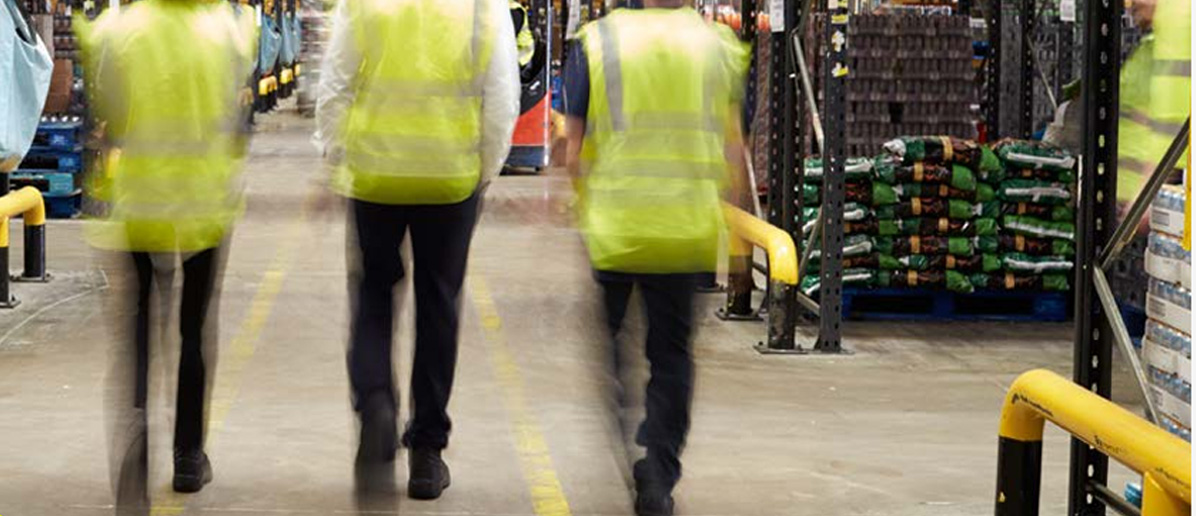
A key topic of the #DriveDangerOut campaign is promoting ways in which the workplace can be designed and encouraging the use of safety products to help keep pedestrians safe.
Pedestrians
Where possible, keep pedestrians and vehicles separate and allow for maximum distance between the two. Drivers and pedestrians need enough time to react effectively if they meet one another.
It is advised that the routes used by vehicles and those used by pedestrians should be separate. The most effective way to do this is to clearly mark the various routes and, where possible, pedestrian traffic routes should represent the paths people would naturally follow to encourage them to stay on them. This can be done by using floor line marking tape and graphic floor stickers.
If vehicles must be operated inside the building, signage and floor markings should be used to inform both drivers and pedestrians of the risks and where to stay safe. HSENI advises the use of barriers or guardrails for pedestrian walkways that lead directly onto a vehicle route.
On shared routes used by both pedestrians and automatic (driverless) vehicles, ensure that vehicles do not trap pedestrians. These vehicles should be fitted with safeguards to keep the risk of injury low.
Temporary Signage and Road Closures
In some cases, temporary signage and road closures are needed, especially in the construction industry. The law states that you must organise a construction site so that both vehicles and pedestrians using site routes can move around safely.
The routes used must be suitable for the persons or vehicles using them. The majority of construction transport accidents result from the inadequate separation of pedestrians and vehicles.
HSENI has published the following actions that will help keep both parties safe:
- Entrances and Exits: Provide separate entry and exit gateways for pedestrians and vehicles.
- Walkways: Provide a firm, level, well-drained walkway for pedestrians to avoid slips and trips.
- Crossings: Where walkways and roads cross, provide clear signage and well-lit crossing points where everyone can see each other clearly.
- Barriers: Install barriers between the roadway and walkway where appropriate.
Barriers and Markings
HSENI advises that the most effective ways to keep vehicle and pedestrian areas separate are to:
- Use protective barriers and guardrails at entrances and exits to buildings, at corners, and at any pedestrian walkway that leads directly onto a vehicle route.
- Use clear markings to separate vehicle and pedestrian routes.
- Use raised kerbs to distinguish between vehicle and pedestrian areas.
Visitors
When you have visitors on site, it is important that they fully understand the health and safety requirements of the site and know who to report to when present. There are ways in which you can make visitor information clear, including using document pockets to prevent information from being damaged. This also allows you to place important information around the site in prominent positions for all to read.
Following these simple steps helps to reduce danger around the site, keep everyone on site safe, and encourage good communication and behaviour from all employees and visitors.
If you wish to find out more about Heyn Environmental’s site safety products, visit Heyn Environmental.
Join our Newsletter
Latest updates, offers and product info sent to your inbox.
[ form ]
