
No products in the basket.
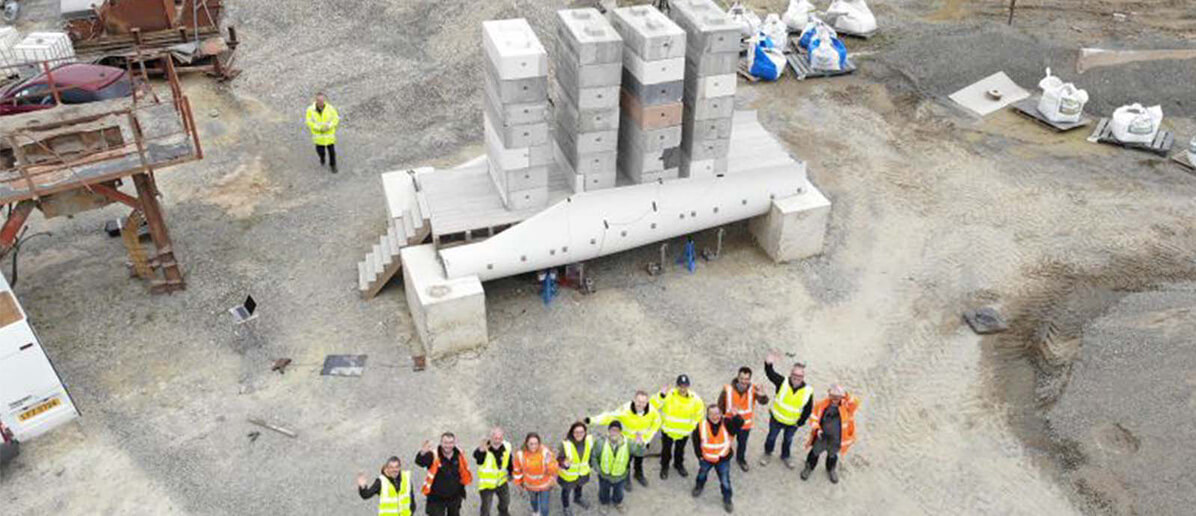
Read how engineers at Queen’s University Belfast are transforming wind turbine blades, which are set to be landfilled or incinerated, into footbridges that can hold the weight of a 30-tonne digger.
In a world that is increasingly seeking sustainable solutions to pressing environmental challenges, researchers at Queen’s University Belfast have made a groundbreaking discovery. They have successfully transformed decommissioned wind turbine blades into functional footbridges, demonstrating the power of innovative thinking and engineering expertise. This remarkable achievement has the potential to revolutionise the way we view renewable energy infrastructure while also addressing the critical need for sustainable infrastructure development.
The Ingenious Transformation
The article titled “Wind Turbines Turned into Footbridges”, available on Queen’s University Belfast’s official website, outlines the incredible journey of these wind turbine blades from the windswept heights of energy production to their new roles as bridges connecting communities. The project, led by Queen’s University’s engineering team, showcases an ingenious blend of environmental sustainability and infrastructure repurposing.
The turbine blades in question, once used to harness wind energy to power homes and businesses, have found a second lease on life. They have been repurposed to create safe and sturdy footbridges, offering a practical solution for outdated infrastructure. This innovation not only reduces waste and environmental impact but also provides essential links for pedestrians and cyclists, fostering connectivity in urban and rural areas.
Heyn Engineering’s Endorsement
Here at Heyn Engineering, we praise Queen’s University Belfast for its groundbreaking research and innovation.
“This remarkable achievement demonstrates the potential for innovation in sustainable infrastructure. Queen’s University Belfast has shown that thinking creatively about repurposing existing assets can lead to remarkable solutions for our communities.”
Kevin Denvir, Director at Heyn Engineering
The Positive Impact
The conversion of wind turbine blades into footbridges represents a significant step forward in addressing two critical challenges facing our world today: sustainable infrastructure and renewable energy. By repurposing these decommissioned turbine blades, Queen’s University Belfast is setting a powerful example for responsible and environmentally conscious engineering practices.
The benefits of this innovation are manifold. Firstly, it reduces the environmental impact of decommissioning and disposing of wind turbine blades, which often involves complex processes and waste management. Secondly, it offers communities an improved quality of life by enhancing accessibility and connectivity through the creation of new pedestrian and cycling pathways. Lastly, it showcases the potential for creative thinking and sustainability in engineering and infrastructure development.
Conclusion
Queen’s University Belfast’s pioneering project, featured in the article “Wind Turbines Turned into Footbridges”, serves as an inspiration for innovative engineering solutions that prioritise environmental sustainability and community development. By visiting their official website, you can gain a deeper insight into this remarkable initiative and its far-reaching implications.
We applaud the efforts of Queen’s University Belfast for such innovation. As we continue to seek ways to address the pressing challenges of our time, it is encouraging to witness projects like this that offer tangible solutions while reminding us of the incredible potential for positive change through thoughtful engineering.
This groundbreaking endeavour serves as a testament to the power of creative thinking and the importance of repurposing existing resources in our journey towards a more sustainable and connected world.
Join our Newsletter
Latest updates, offers and product info sent to your inbox.
[ form ]
